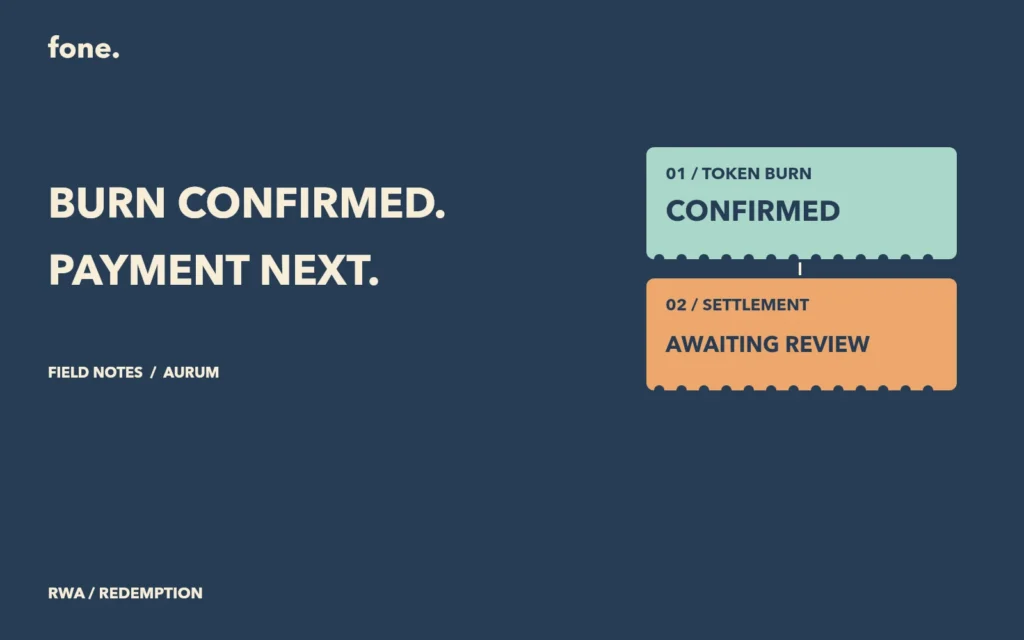
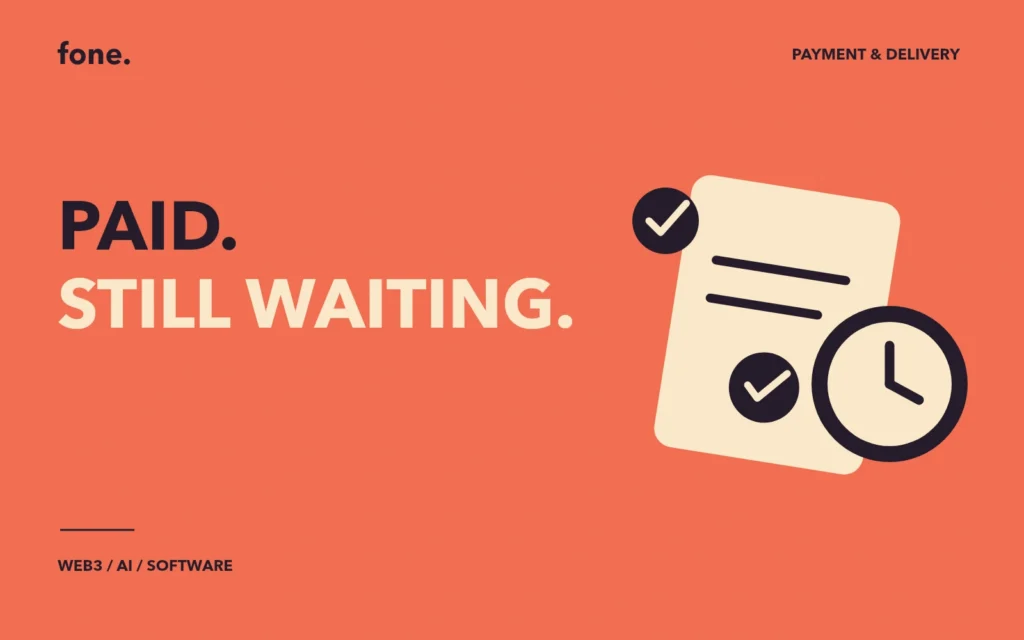
A confirmed stablecoin payment can leave an order undelivered because the merchant still has work to do after confirmation. The payment notification may have failed, the order may need reconciliation, or the fulfillment worker may not have completed its task. Start by finding which step stopped, using the same order reference throughout.
StableIn Payments keeps payment and delivery states separate. Its checkout can show that payment is confirmed while the merchant store is still preparing access. That distinction matters when someone has paid for a download and is looking for the file.
Follow one order beyond checkout
The StableIn demo store begins with a product identifier. The merchant backend selects the amount and asset from its catalog and records the order before opening checkout. The browser cannot choose a lower price by sending a different amount.
After the payment reaches the configured confirmation state, StableIn sends a signed webhook to the merchant. A webhook is an HTTP notification to the merchant's backend. The receiver verifies it, checks the order and records the work to be done. A separate worker creates the delivery entitlement.
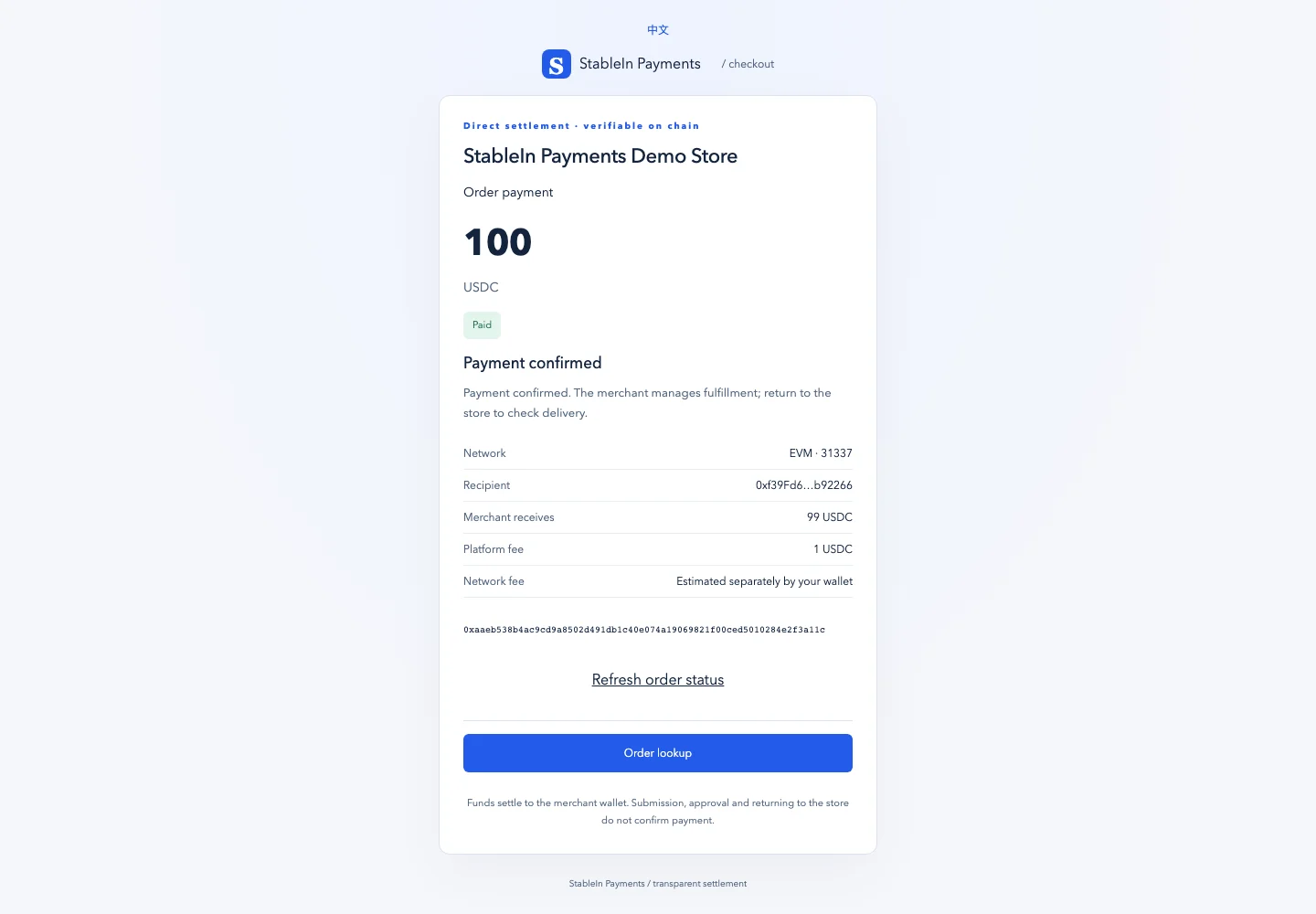
These steps leave different evidence. A successful chain transaction says nothing about whether the merchant's notification endpoint was available. An accepted notification does not show that a delivery worker has finished. The merchant needs an order record that support can follow through both.
A failed notification after payment
The local StableIn demonstration recorded on October 20, 2026 includes a receiver that returns HTTP 503. Payment can be confirmed while this notification path is unavailable. The merchant workspace shows the failed delivery and provides a replay action within the operator's permissions.
The recorded recovery restores the receiver and replays the notification. The resulting merchant order has one recorded payment event and one fulfillment record. The acceptance record also covers a lost acknowledgement after the merchant has committed its work, followed by repeated delivery of the event.
Those results come from a local EVM chain using test assets and a test wallet bridge. Finality was explicitly simulated and the retry schedule accelerated for the exercise. They describe the demonstrated recovery path, rather than a production delivery-time guarantee or a test of every wallet.
Check the stopped step before retrying
For an existing integration, I would start with the merchant order ID and the corresponding platform order ID. Then I would check the following records in order.
| What the records show | What to check next |
|---|---|
| A transaction was submitted, but the platform order is still confirming | Check the transaction outcome, indexer progress and the confirmation policy for that network. Do not grant access from a transaction hash alone. |
| The platform order is paid, but its webhook failed | Inspect the receiver's response and fix the receiver or its configuration before replaying through the authorized recovery path. |
| The receiver accepted the event, but delivery is pending | Check that the merchant fulfillment worker is running and can reach its database and the order API. Inspect pending work and retry attempts. |
| A fulfillment record exists, but the customer cannot use the product | Check the customer's access or download path. Reconcile the existing entitlement before issuing another one. |
The status response in StableIn's example store exposes payment, refund and fulfillment states separately. That makes it possible to ask whether an order is paid, whether a refund changed its eligibility, and whether delivery completed without treating them as one status.
Make a repeated notification safe to receive
StableIn's merchant example verifies the signature over the original request bytes. It checks the merchant identity and compares the order reference, chain, gateway, token and amount against the local order. It then fetches the current platform order before deciding what to queue.
The event ID is recorded with a payload hash. Receiving that event again with the same body does not create new work; reusing the ID with a different body is rejected. Delivery also has an order-level boundary. The example's delivery queue and shipment table each use the order ID as a unique key.
That second boundary matters because a payment can produce more than one relevant notification. The business still owes the customer the entitlement associated with the purchase. The worker rechecks the current order and records the entitlement and its completion state in the same database transaction.
This protects the example's database-backed entitlement. If your integration sends an email, calls a licensing service or dispatches a physical shipment, that external action needs its own duplicate prevention and reconciliation rules. A local record cannot, by itself, prove what happened in another system.
Duplicate webhook handling is also documented in Stripe's webhook guidance. That is a useful general integration reference; the StableIn behavior described here comes from its own receiver and worker implementation.
Read the current order before fulfilling an old event
An old payment notification can arrive after a refund. StableIn's example retrieves the current order and checks its revision before accepting a state update. The worker checks again before fulfillment. A fully refunded order is ineligible for a new delivery.
The recorded end-to-end case delivers a full-refund event before an older paid event and expects zero shipments for that order. A different case refunds a purchase that already has an entitlement. That existing entitlement remains recorded. Revoking previously delivered access is a separate merchant business rule and must be designed explicitly.
Questions to settle before integration
Should the customer pay again if delivery is missing?
For a confirmed payment, investigate the existing order first. A second payment would create another financial event without fixing the failed notification or delivery task. Give the customer an order lookup and a support route that retain the original reference.
Is a checkout button enough for a digital store?
The demonstrated integration also needs a merchant backend, database and continuously running fulfillment worker. Someone needs to own failed notifications and stalled deliveries. The actual grant of access must match the product you sell.
Use the release review checklist to record your failure and recovery checks before launch. If you are adding wallet payments to an existing store, see StableIn Payments and request a demo. Share your website stack, target network and what the buyer should receive after payment; those details define the integration work.