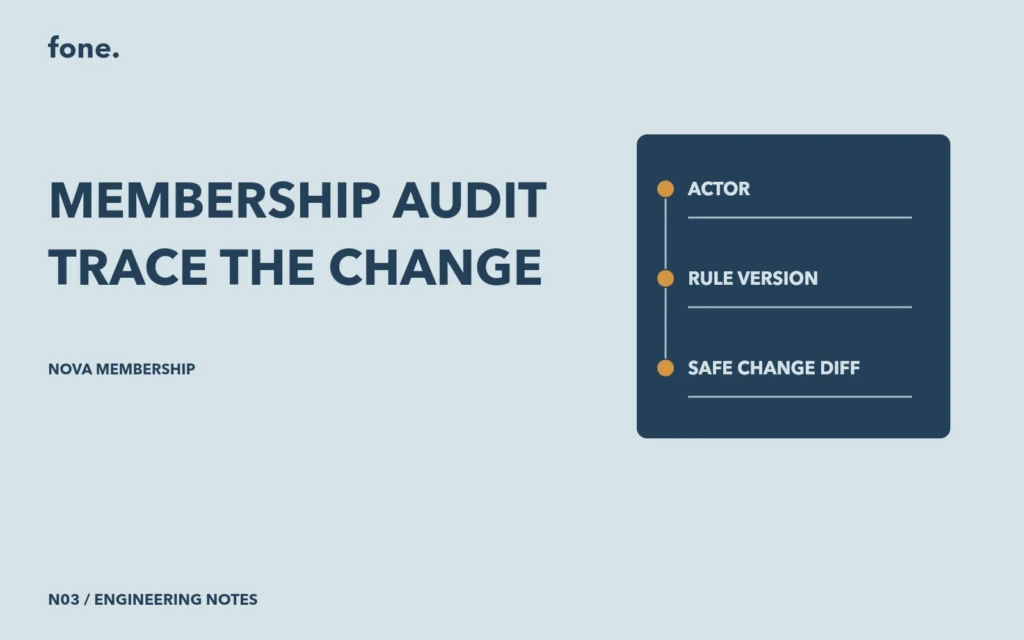
A rule version can tell an operator which configuration is active while leaving another question unanswered. Who requested the change, what was reviewed and which request actually changed the state? NOVA Membership has several source-level records that help answer parts of that question. They should be reviewed together before describing the system as a complete audit trail.
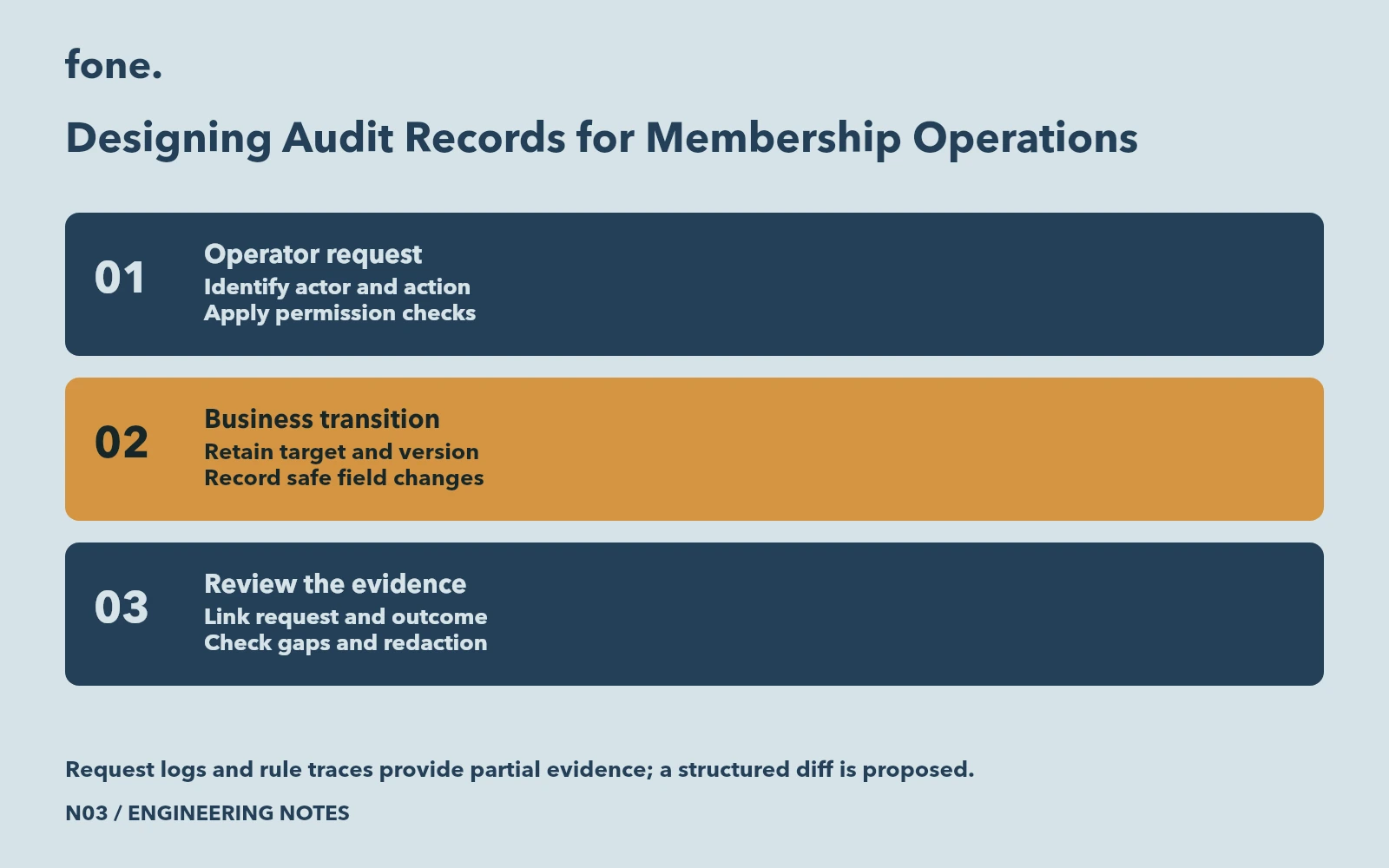
The inspected rule controller marks creation, validation, review and publication actions for operation logging. Its permission checks distinguish the roles allowed to create, review and publish. The rule service separately retains creator and reviewer identities and stores execution traces for simulations. These records have useful coverage, but they do not all contain the same business evidence.
Follow the action into the business record
The general logging component records the operator name when available, request URL, method and action type. It records request and response material according to the controller's logging options, includes elapsed time and handles thrown exceptions as failures. That can help locate an operation and understand how the request ended.
The rule transition itself checks the expected prior status before writing the target status. A request can therefore fail because another operation already changed the version. A good review view should show that conflict alongside the actual rule record. Looking only at the original button press could imply that a publication succeeded when the stored state never changed.
Simulation uses a separate business table. The service stores the rule-set identifier, input facts, result trace and request identifier. This is more closely connected to why a rule matched than a generic HTTP request log. It is also sensitive to what the caller puts into the input facts, so its data handling needs review independently of the controller log.
| Evidence | Present in inspected source | Additional design to consider |
|---|---|---|
| Operation log | Actor name, route, method, result and timing | Stable actor identifier and business target |
| Rule record | Creator, reviewer, version and status | Explicit previous-to-next transition history |
| Simulation trace | Rule set, facts, result and request ID | Field allowlist and retention policy |
| Configuration snapshot | Version metadata and record counts | Complete content snapshot if required |
| Change explanation | No general before/after diff established | Safe field diff and required reason |
Keep sensitive fields out deliberately
The logging component excludes several named password fields and permits additional exclusions on a logging annotation. That is a useful starting control. It does not establish that every secret in a nested object or an unfamiliar field name will be removed. Membership integrations can introduce tokens and credentials that have no password-like name.
A proposed audit record should therefore use an allowlist of business fields. Keep the version identifier, action and safe change summary, while excluding authentication tokens and secret material. OWASP recommends deciding which event attributes are needed and excluding sensitive information rather than logging indiscriminately. OWASP logging guidance
The inspected component truncates some logged request and response text. Truncation limits size but can also remove the field that explains a change. It should not be treated as a structured before-and-after record. If the review needs a complete diff, store explicitly selected fields with a schema and an intentional length policy.
Decide how missing logs are detected
The general operation logger schedules persistence asynchronously. That means the source review cannot claim that every successful business transaction and its operation log commit atomically. The application needs a defined response when the log writer fails, including how the gap becomes visible to operators.
For actions requiring stronger evidence, an extension could create a business audit event in the same transaction as the state change, then export it to a separate review store. That design would still need retry handling and a retention decision. Calling a log append-only is not sufficient evidence of tamper resistance or complete delivery.
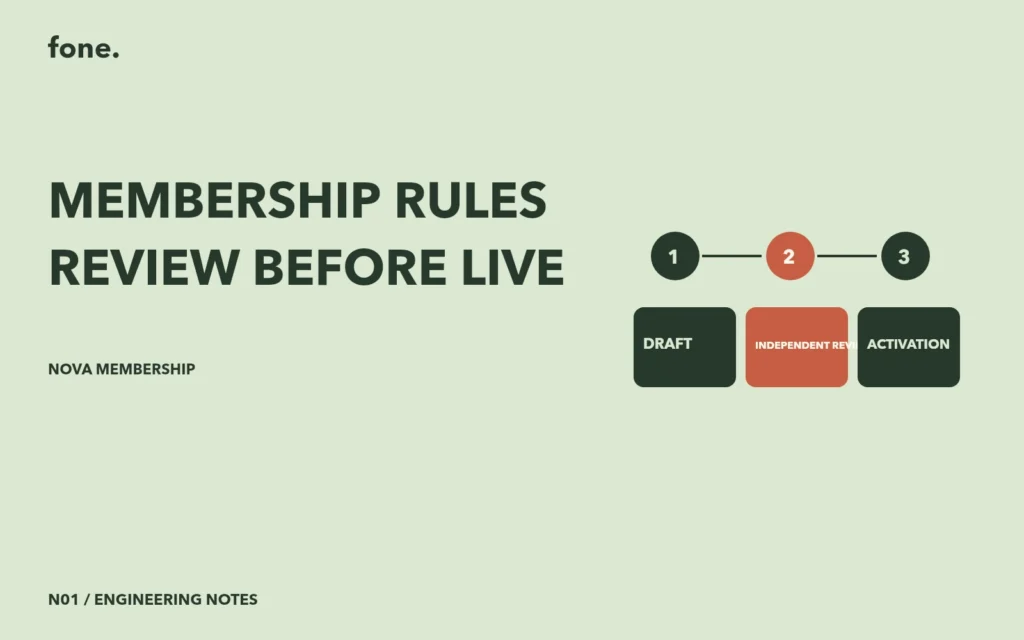
Start the coverage review with the sensitive actions already exposed. Follow rule creation, independent review and activation into their stored records. Include a denied action and a stale-state conflict. For each case, identify the actor, target version, outcome and request correlation without reading credentials or private member content.
The membership audit record worksheet contains a proposed field model and unexecuted coverage checks. NOVA Membership provides the corresponding local operations workflow. Bring the actions that need review, the evidence retention period and the allowed reviewer roles to define the audit scope precisely.